Update: 2026 Zhongguancun Forum in Beijing to highlight full integration of technological, industrial innovation

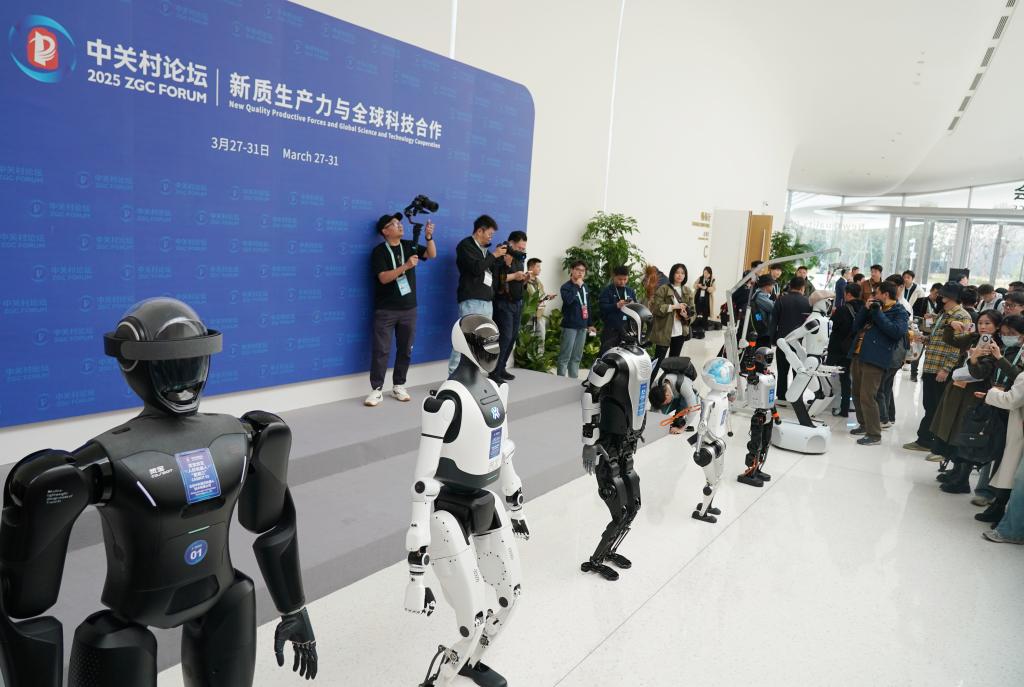
BEIJING, March 18 (Xinhua) -- The 2026 Zhongguancun Forum (ZGC Forum) will spotlight the theme of "Full Integration Between Technological and Industrial Innovation," an official with the Ministry of Science and Technology said on Wednesday.
This year's ZGC Forum will be held in Beijing from March 25 to 29. More than 1,000 guests from over 100 countries and regions are expected to participate in the forum, which features more than 100 events, Lin Xin, vice minister of science and technology, said at a press conference.
Main events will include the opening ceremony and plenary session, parallel forums, achievement releases, the ZGC International Technology Trade Fair, and the Grand Final of the Zhongguancun International Advanced Technology Innovation Competition.
The 2026 forum will be defined by four unique features. First and foremost, it will emphasize the expansion of the capital city's efforts to become an international science and technology innovation center. This will involve hosting forums and launching relevant policies aimed at deepening coordination among Beijing, Tianjin Municipality and Hebei Province, all of which are located in north China, Lin said.
Lin also noted that it will stress the deep integration of technological innovation with industrial innovation by focusing on frontier fields such as 6G, brain-computer interfaces, and cell and gene therapy.
The integrated advancement of education, science and technology, and talent cultivation will also be a key feature of the 2026 forum, according to Lin.
Additionally, this year's forum will emphasize high-level scientific and technological openness and cooperation, she added.
"The promotion of extensive artificial intelligence (AI) applications will also be highlighted at this year's ZGC Forum," said Jin Wei, vice mayor of Beijing, at the press conference.
Jin added that participants at the forum will get a firsthand experience of how the AI evolution is empowering diverse industries. For instance, AI "interpreters" will be on duty during the forum, expanding language services from the previous two languages of Chinese and English to eight languages, including French, Russian and Spanish.
"Thereby, they can sustain seamless communication among participants from around the world," he said.
Jin disclosed that a robot cafe will cater to forum participants. "Last year, robots at the forum could only prepare coffee individually. This year, they will collaborate to provide meal sets. Additionally, a robot band will deliver captivating performances at this year's forum."
The 2026 forum is jointly organized by several Chinese government agencies, including the Ministry of Science and Technology, the National Development and Reform Commission, and the Ministry of Industry and Information Technology.
Founded in 2007, this forum in Beijing has evolved into a global, comprehensive, open and high-level international event for enhancing global innovation in science and technology.
As an international science and technology innovation center, Beijing has been emphasizing the necessity of a systematic approach to innovation platform development.
Jin disclosed that Beijing has made every effort to ensure the high-quality operational service and support for national laboratories, established 145 national key laboratories, and constructed 10 world-class new research and development institutions in frontier fields such as life sciences, new-generation information technology, and applied mathematics.
In Beijing's Huairou Science City, a comprehensive national science center, a total of 37 sci-tech facility platforms have been established. To date, 29 of these platforms are operational for research, and 17 platforms are accessible to the global community, collectively offering 1.77 million hours of shared machine time. These platforms have produced 439 major sci-tech achievements.
"Beijing is also endeavoring to foster an open innovation ecosystem with greater global competitiveness. We are vigorously advancing global industrial collaboration," Jin said.
He disclosed that, in 2025, the number of newly established foreign-invested enterprises in Beijing increased by 20 percent, bringing the total number of foreign-funded R&D centers to 332.
Beijing has embraced the University of Cambridge from Britain and multiple other institutions to extend their sci-tech footprints in China, alongside Eli Lilly, Sanofi, Johnson & Johnson, Bayer and other multinational pharmaceutical enterprises, according to Jin. ■








Comments